Introduction
Financial scams are increasingly sophisticated. Criminals pose as banks, HMRC, investment managers, or even romantic interests. They target people of all ages and incomes. The emotional and financial damage can be devastating – not just the money lost, but the feeling of betrayal. This guide helps you recognise the most common financial scams in the UK, understand the tactics fraudsters use, and take practical steps to protect yourself and your family. It also explains what to do if you think you have been scammed.
Based on rules as of April 2026. Always verify current rates with official sources.
The Psychology of Scams: Why Smart People Fall for Them
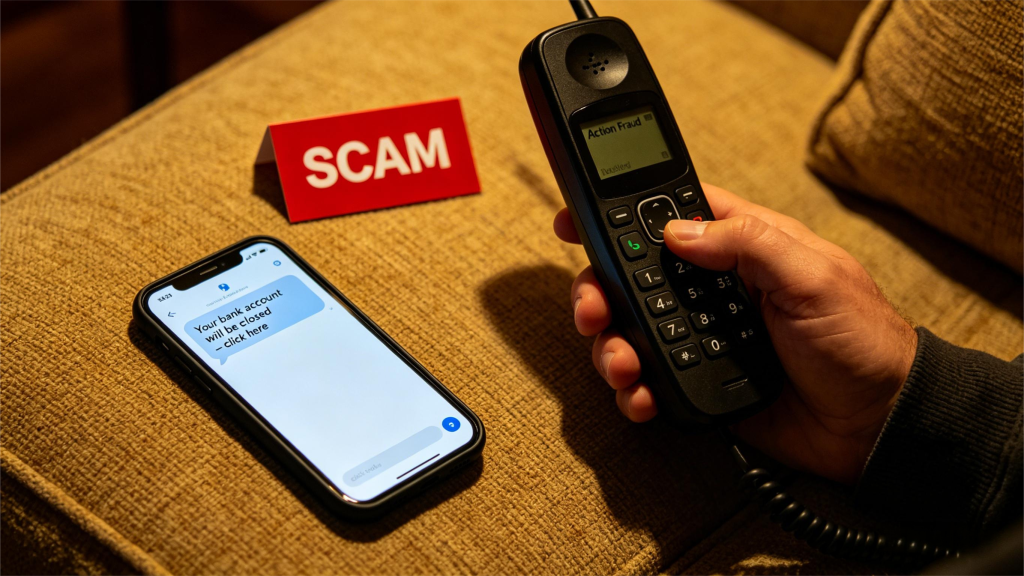
Scams are not about intelligence. They exploit universal human traits: trust, urgency, fear, greed, and the desire to help. A typical scam creates a false sense of urgency (“Your bank account will be closed in 2 hours”), authority (“This is HMRC calling”), or opportunity (“Guaranteed 20% returns – limited places”).
The best defence is scepticism. Assume any unsolicited contact (phone call, email, text, social media message) is a scam until proven otherwise. Legitimate organisations rarely contact you out of the blue asking for personal information or money.
Scam 1: Bank Impersonation (Authorised Push Payment Fraud)
How it works: You receive a call, text, or email claiming to be from your bank’s fraud department. They say there has been suspicious activity on your account. To “protect” your money, you must transfer it to a “safe account” – which is actually the scammer’s account.
Tactics:
- The caller ID may show your bank’s real number (spoofing).
- They may already know your name, address, and part of your account number (from data breaches).
- They may keep you on the phone for hours, creating pressure.
Red flags:
- Your bank will never ask you to transfer money to a different account.
- Your bank will never ask for your full PIN, password, or card reader codes.
- The caller becomes aggressive or creates urgency (“Your life savings are at risk!”).
What to do: Hang up. Call your bank using the number on the back of your debit card (not the number the caller gave you). Use a different phone if possible (scammers can keep the line open).
Scam 2: HMRC Tax Scams
How it works: You receive a call, text, or email claiming you owe unpaid tax and will be arrested or face legal action unless you pay immediately – usually via bank transfer, gift cards, or cryptocurrency.
Red flags:
- HMRC will never threaten arrest or send police to your home.
- HMRC will never demand payment via gift cards, iTunes vouchers, or Bitcoin.
- HMRC’s first contact about unpaid tax is usually by letter, not by phone or email.
What to do: Ignore and delete. Do not call back any number provided. If you are worried, log into your Personal Tax Account on GOV.UK (do not use links in the message). Any genuine tax due will appear there.
Scam 3: Investment Scams (Boiler Rooms, Crypto, Forex)
How it works: You are offered an “exclusive” investment opportunity with guaranteed high returns, low risk, and limited availability. Common products: cryptocurrency, foreign exchange (forex), rare earth metals, carbon credits, or land banking.
Tactics:
- Professional‑looking websites, brochures, and even “customer testimonials” (fake).
- Pressure to “act now” before the opportunity closes.
- Small initial investment that shows “profits” (you are paid from new investors’ money – a Ponzi scheme).
Red flags:
- Any promise of “guaranteed returns” – all investments carry risk.
- Unsolicited contact (you did not ask to be contacted).
- The company is not on the FCA register (check the Financial Services Register online).
- They pressure you to transfer money quickly, without giving you time to research.
What to do: Check the FCA register. If the firm is not authorised, it is likely a scam. Even if it is authorised, call the FCA helpline (0800 111 6768) to verify. Never invest based on a cold call.
Scam 4: Romance Scams
How it works: You meet someone on a dating app or social media. They build a relationship over weeks or months. Eventually, they ask for money – for a medical emergency, a flight to see you, an investment opportunity, or help with a “temporary” problem.
Red flags:
- They are unable to meet in person (always overseas, or a last‑minute excuse).
- Their profile photos are too perfect (reverse image search them).
- They ask for money for an emergency, but you have never met.
- They profess love very quickly.
What to do: Never send money to someone you have not met in person. Do not share intimate photos that could be used for blackmail. If you suspect a romance scam, stop all contact and report to Action Fraud.
Scam 5: Phishing and Smishing (Email and Text Scams)
How it works: You receive an email or text that appears to be from a legitimate organisation (Royal Mail, PayPal, Amazon, Netflix, a utility company). It asks you to click a link to “verify your account,” “pay a small fee,” or “track a package.” The link leads to a fake website that steals your login credentials or installs malware.
Red flags:
- Poor grammar or spelling.
- The sender’s email address is slightly wrong (e.g., support@paypa1.com instead of paypal.com).
- Urgent language (“Your account will be suspended today”).
- Requests for personal information (password, credit card number, PIN).
What to do: Do not click any links. Log into your account directly by typing the organisation’s web address into your browser. If the message claims to be from a company you use, contact them using their official customer service channels.
Scam 6: Purchase Scams (Facebook Marketplace, Gumtree, etc.)
How it works: You see an item for sale at an attractive price. The seller asks for payment upfront via bank transfer, then disappears without delivering the item. Or they send a fake “shipping confirmation” email.
Red flags:
- The price is too good to be true (e.g., a £1,000 iPhone for £300).
- The seller insists on bank transfer, not PayPal Goods & Services or cash on collection.
- The seller has no reviews or a very new account.
What to do: For in‑person sales, meet in a public place and pay cash or via bank transfer only after seeing the item. For shipped items, use PayPal Goods & Services (which offers buyer protection) or a credit card (Section 75 protection for items over £100).
Scam 7: Crypto and “Get Rich Quick” Schemes
How it works: Social media ads or “influencers” promote a crypto trading platform, a “smart contract,” or a “mining pool” promising huge returns. Victims deposit money, see fake “profits” on a dashboard, but cannot withdraw their funds.
Red flags:
- Promises of daily or weekly returns (e.g., “1% per day”).
- Referral bonuses for bringing in new investors (pyramid scheme).
- The platform is not registered with the FCA (most crypto platforms are not – they are high risk).
- Withdrawals are denied or subject to “fees” that grow over time.
What to do: Treat any crypto investment as high risk. Only invest money you can afford to lose. Stick to regulated platforms (e.g., those on the FCA register). Be extremely sceptical of social media ads.
How to Protect Yourself: The SCAM Acronym
S – STOP. Do not act immediately. Scammers create urgency to bypass your rational mind.
C – CHECK. Verify independently. Use official contact details, not those provided in the message.
A – ADVISE. Talk to someone you trust. A second pair of eyes often spots red flags you missed.
M – REPORT. Report scams to Action Fraud (0300 123 2040) or to your bank immediately.
Additional protections:
- Enable 2‑factor authentication on email, banking, and social media accounts.
- Use a password manager – unique, strong passwords for every site.
- Check your bank statements weekly – report unauthorised transactions immediately.
- Sign up for the Telephone Preference Service – reduces legitimate marketing calls, but scammers ignore it.
- For elderly or vulnerable relatives – consider registering with the “Vulnerable Customer” service at their bank, and talk to them about scams regularly.
What to Do If You Have Been Scammed
1. Contact your bank immediately – Call the fraud hotline (number on your card). They may be able to stop a transfer or recover funds if you act quickly. Ask about the “Contingent Reimbursement Model” (CRM Code) – many banks have signed up to reimburse victims of authorised push payment fraud, but only if you acted reasonably (e.g., you were not grossly negligent).
2. Report to Action Fraud – Call 0300 123 2040 or use their online reporting tool. You will receive a crime reference number.
3. Report to the platform – If the scam happened on Facebook Marketplace, eBay, or another platform, report the user.
4. Change your passwords – If you shared any login details, change them immediately.
5. Monitor your credit reports – Some scams involve identity theft. Check your credit reports from Experian, Equifax, and TransUnion for new accounts you did not open.
6. Tell someone – Scams thrive on shame. Talking about it helps others avoid the same trap and reduces your emotional burden.
Key Takeaways
- Assume any unsolicited contact is a scam – bank, HMRC, investment offers, romantic interests.
- Never transfer money to a “safe account” – legitimate organisations will not ask.
- Check the FCA register before investing – and be sceptical of guaranteed returns.
- Do not click links in texts or emails – log in directly via the official website.
- Talk to someone before sending money – a second opinion often reveals red flags.
- Report scams to Action Fraud – even if you lost no money, reporting helps protect others.
This article is for general information and educational purposes only. It does not constitute financial advice. Tax rules, allowances, and product terms may change. Always check with HMRC or an FCA-authorised adviser for your personal circumstances.