Introduction
You have decided to start investing. You know you want a low‑cost global tracker inside a Stocks and Shares ISA. But where do you open the account? The UK has dozens of investment platforms (also called brokers or fund supermarkets), each with different fee structures, investment choices, and user experiences. Choosing the wrong platform can cost you hundreds of pounds per year in unnecessary fees – and make it harder to stick to your investment plan. This guide explains how to compare platforms, what features to look for, and how to match a platform to your portfolio size and trading style. It does not recommend specific providers, but gives you the framework to choose.
Based on rules as of July 2026. Always verify current rates with official sources.
The Two Main Fee Structures
Most platforms charge either a percentage of assets under management or a flat fee (monthly or annual). The right choice depends on your portfolio size.
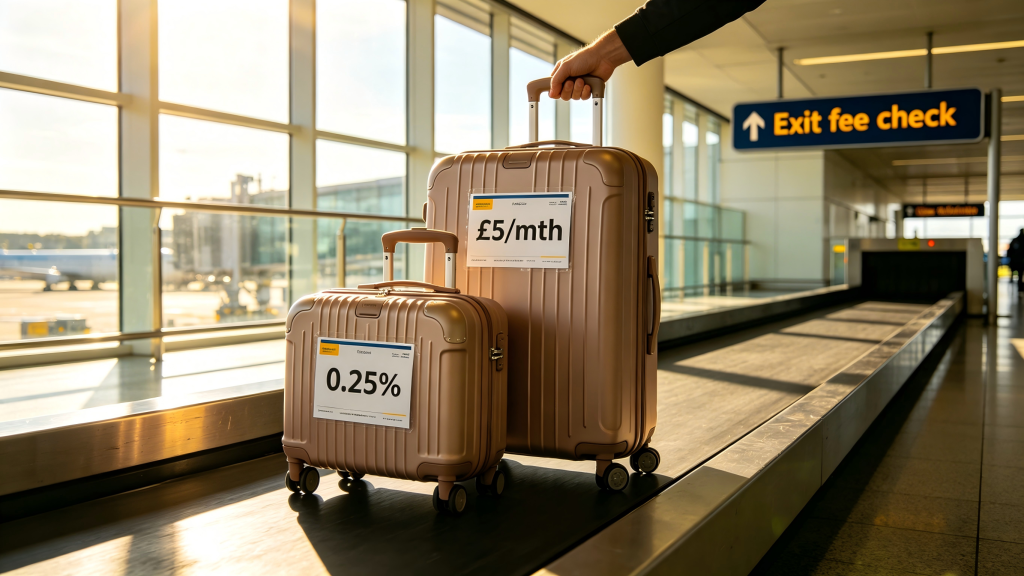
Percentage‑fee platforms: Charge 0.15% to 0.45% of your portfolio value per year. For a £10,000 portfolio, 0.25% = £25 per year. For a £100,000 portfolio, 0.25% = £250 per year.
Flat‑fee platforms: Charge a fixed amount per month or year – typically £5–£15 per month (£60–£180 per year). For a £10,000 portfolio, £120 per year = 1.2% – very expensive. For a £100,000 portfolio, £120 per year = 0.12% – very cheap.
Crossover point: For portfolios under about £50,000, percentage‑fee platforms are usually cheaper. For portfolios over £50,000, flat‑fee platforms often work out cheaper. But the exact crossover depends on the specific fees.
Trading fees: Some platforms charge a fee every time you buy or sell (e.g., £5–£15 for ETFs and shares, free for funds). Others offer free trading for funds but charge for ETFs. If you invest monthly, trading fees can add up. Look for platforms with low or zero trading fees for regular investments.
What to Look for in a Platform
1. ISA, SIPP, and General Account availability. Most platforms offer all three, but check. If you want to invest inside an ISA (recommended), ensure the platform provides a Stocks and Shares ISA. If you want a SIPP, check the annual fee (some charge extra for SIPPs).
2. Fund and investment choice. For a lazy portfolio (global tracker + bond fund), almost every platform offers the major index funds (Vanguard, Blackrock, HSBC, etc.). If you want to buy individual shares, investment trusts, ETFs, or bonds, check that the platform supports them.
3. Regular investment plan. Many platforms allow you to set up a monthly direct debit that automatically buys a fund of your choice, often with reduced or zero trading fees. This is essential for disciplined investing.
4. App and website quality. Read independent reviews. A clunky interface can discourage you from checking your account (which might be good – less temptation to tinker) but also makes it hard to find tax documents or change your regular investment amount.
5. Customer service. If something goes wrong – a missing dividend, a failed transfer – you want a human to speak to. Check reviews for response times and helpfulness.
6. Exit fees. Some platforms charge a fee to transfer your account to another provider (e.g., £50–£200 per account). Avoid these if possible. If you already have an account with exit fees, factor them into your decision to stay or leave.
7. Tax reporting. For general investment accounts (outside ISAs/pensions), the platform should provide an annual tax report summarising dividends, interest, and capital gains. For ISAs and SIPPs, tax reporting is not needed, but the platform should still provide statements.
Platform Types: Full‑Service vs Low‑Cost vs App‑Only
Full‑service platforms: Offer a wide range of investments (funds, shares, ETFs, bonds, investment trusts), research tools, and telephone support. Fees are higher (percentage fee 0.25–0.45% or flat fee £10–£15 per month). Suitable for larger portfolios and active investors.
Low‑cost platforms: Focus on funds (especially index trackers) with very low percentage fees (0.15–0.25%). Limited share dealing or higher trading fees for shares. Excellent for passive investors with buy‑and‑hold portfolios.
App‑only platforms: Modern, mobile‑first, often with no trading fees for ETFs and shares (they make money from foreign exchange fees or payment for order flow – the latter is not common in the UK). May have limited investment choice (e.g., only certain ETFs). Suitable for smaller portfolios and frequent traders (though frequent trading is not recommended).
Which is best for most beginners? A low‑cost platform with a good regular investment plan, offering a wide range of index funds, with a percentage fee of 0.15–0.25%. Open a Stocks and Shares ISA, set up a monthly direct debit, and ignore it.
How to Compare Platforms: A Step‑by‑Step Example
Assumptions: You have a £30,000 portfolio. You will add £500 per month. You want to buy a global equity tracker (fund, not ETF) once per month. You will not trade individual shares.
Step 1 – List platforms. Use a comparison site (e.g., Monevator’s platform comparison table) or check the main providers.
Step 2 – Calculate annual fee for your portfolio size. For a percentage‑fee platform at 0.25%: £30,000 × 0.0025 = £75 per year. For a flat‑fee platform at £120 per year: £120. Percentage is cheaper at this portfolio size.
Step 3 – Add trading fees. If the platform charges £5 per fund purchase, and you buy one fund per month, that is £60 per year. Total = £75 + £60 = £135. A platform with free fund trading would be £75 total. Choose the free trading option.
Step 4 – Check for regular investment discounts. Some platforms reduce or waive trading fees for regular monthly investments. For example, a platform might charge £10 for an ad‑hoc trade but £1.50 for a regular investment. Use that.
Step 5 – Consider future growth. If you expect your portfolio to grow to £100,000 in a few years, a flat‑fee platform (£120 per year) may become cheaper than a percentage platform (0.25% = £250). You could start with percentage and switch later – but check exit fees.
Step 6 – Check ISA fees. Some platforms charge an extra fee for ISAs (e.g., £20 per year). Include that.
Step 7 – Read reviews. Search for “[platform name] review Reddit” or look at Trustpilot. Focus on recent reviews.
Avoiding Common Platform Mistakes
Mistake 1: Choosing a platform based on a cashback or free trade offer. A £100 cashback is nice, but if the platform charges 0.45% instead of 0.15%, you will lose that £100 in the first year on a £33,000 portfolio. Look at long‑term costs, not introductory offers.
Mistake 2: Paying for advice you do not need. Some platforms offer “managed portfolios” with higher fees (0.5–1.0% plus fund fees). If you are comfortable with a simple tracker, you do not need this.
Mistake 3: Opening multiple accounts unnecessarily. You can hold an ISA, SIPP, and general account with the same platform. Consolidating reduces fees (if the platform charges a flat fee) and simplifies tracking.
Mistake 4: Not checking exit fees before joining. If you might want to switch platforms later, avoid those with high exit fees. Most platforms have abolished exit fees, but some still charge.
Mistake 5: Ignoring the platform’s financial stability. Platforms are covered by FSCS up to £85,000 for cash held, but investments are held in nominee accounts (separate from the platform’s own assets). If the platform goes bust, your investments should be returned to you, but there could be delays. Stick to well‑established, FCA‑regulated platforms.
Platform Features for Different Investor Types
For the passive, buy‑and‑hold investor (most people):
- Low percentage fee (0.15–0.25%) or flat fee for larger portfolios.
- Free regular fund investing.
- Wide choice of index funds.
- ISA and SIPP available.
- Good mobile app for checking balance (but you will not trade often).
For the active trader (not recommended for beginners):
- Flat fee (trading frequently makes percentage fees expensive).
- Low trading fees (£5 or less per trade).
- Real‑time pricing and fast execution.
- Access to international markets.
For the SIPP investor:
- Check the SIPP fee – some platforms charge extra (e.g., 0.15% + £100 per year).
- Ensure the platform offers the investments you want (some SIPPs restrict certain funds).
- Check whether the platform handles tax relief claims automatically (most do).
For the junior ISA (JISA) saver:
- Many platforms offer JISAs with the same fee structure as adult ISAs, but some have lower minimums.
- Look for a platform that allows you to manage the JISA alongside your own account.
Switching Platforms: How and When
If you realise you are paying too much, you can switch.
How to switch:
- Open a new platform account (do not close the old one yet).
- Request an in‑specie transfer (if you want to move investments without selling) or a cash transfer (sell everything, move cash, rebuy). In‑specie is better for tax reasons in general accounts; inside an ISA, selling and rebuying is tax‑free but you may be out of the market during the transfer.
- The new platform will handle the transfer (you fill out a form). The process takes 2–6 weeks.
- Once the transfer is complete, close the old account (if you are not keeping it).
When to switch:
- Your portfolio has grown large enough that a flat‑fee platform becomes cheaper than your current percentage‑fee platform.
- Your current platform has increased fees.
- You need features your current platform does not offer (e.g., a SIPP).
- You are unhappy with customer service.
Do not switch too often. Each transfer takes time and you may miss market movements. Review your platform choice every 2–3 years.
Key Takeaways
- Two main fee structures – percentage (0.15–0.45%) better for small portfolios; flat fee (£5–£15/month) better for large portfolios.
- Crossover around £50,000 – calculate for your specific portfolio size.
- Prioritise low fund trading fees – free regular investing is ideal.
- Check exit fees before joining – avoid platforms that charge to leave.
- For most beginners – a low‑cost percentage‑fee platform with free regular fund investing and an ISA.
- Switch only when the savings justify the hassle – every 2–3 years is enough.
This article is for general information and educational purposes only. It does not constitute financial advice. Tax rules, allowances, and product terms may change. Always check with HMRC or an FCA-authorised adviser for your personal circumstances.